
Lumbar Pars Stress Fracture & Stress Reaction: Causes, Diagnosis & Evidence-Based Treatment
Expert Physiotherapy Guidance from Sports Performance Physiotherapy
Low back pain during sport can often be more than just a “sore lower back”.
One important but frequently overlooked cause — especially in young athletes and active adults — is a lumbar pars stress reaction or stress fracture.
These injuries can significantly impact performance if not diagnosed and managed correctly.

What Is a Lumbar Pars Stress Reaction or Stress Fracture?
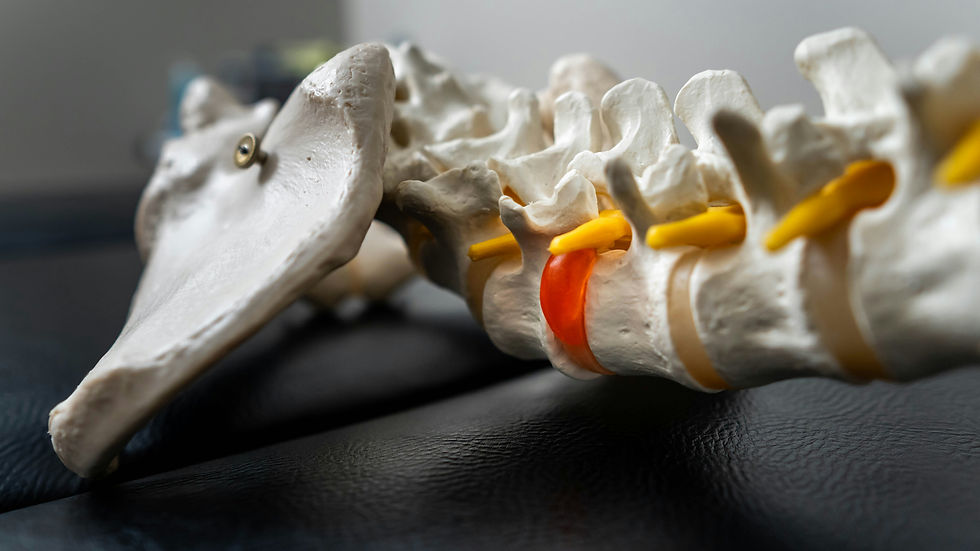
The pars interarticularis is the segment of bone between the superior and inferior facet joints of a lumbar vertebra.
Stress reaction = early bone injury with oedema (no fracture line)
Stress fracture = progression to a break in the bone (spondylolysis)
These injuries develop along a continuum:
Bone strain → Stress reaction → Incomplete fracture → Complete fracture
If the rate of bone stress exceeds the body’s ability to repair, injury progression occurs.
Early detection is critical to prevent worsening along this continuum.
Who Is at Risk?
Lumbar pars stress injuries are most common in sports involving repetitive:
Lumbar extension
Rotation
Side bending
High-risk groups include:
Cricket fast bowlers
Gymnasts
Footballers (soccer, rugby)
Basketball athletes
Contributing factors may include:
High training loads
Poor recovery
Inadequate energy intake
Repetitive sport-specific movements
Common Symptoms & Clinical Presentation
Athletes may report:
Localised lower back pain (central or slightly off-centre)
Stiffness as a primary symptom
Pain worsening with extension-based activities
Symptoms improving with rest
Clinical Indicator
The single-leg hyperextension test may reproduce symptoms and is commonly used in assessment.
Diagnosis: Clinical & Imaging Approaches
Diagnosis includes:
Clinical history
Physical examination
Movement assessment
Imaging
MRI is the preferred imaging modality because:
It detects early bone stress (oedema)
It avoids radiation exposure
It is highly sensitive for early-stage injury
Imaging helps differentiate:
Stress reaction
Incomplete fracture
Complete fracture
Early diagnosis improves the likelihood of successful conservative management.
Evidence-Based Treatment Strategies
1. Conservative Management (First-Line)
Most cases are managed non-surgically.
Treatment includes:
Activity modification
Physiotherapy focused on core and lumbar stability
Pain-free strengthening
Progressive loading
Early rehabilitation is recommended over prolonged rest to:
Maintain muscle function
Prevent deconditioning
Improve return-to-sport outcomes
For structured lower back rehabilitation, see our Musculoskeletal Physiotherapy in Drummoyne.
2. Graded Return to Sport
Return to sport should be:
Criteria-based
Individualised
Athletes should demonstrate:
✔ Pain-free lumbar extension and rotation
✔ Adequate core and lower limb strength
✔ Completion of sport-specific conditioning
Returning too early increases recurrence risk — particularly if bone healing is incomplete.
Rehabilitation Principles: What Works?
Rehabilitation focuses on:
✔ Core and trunk stability
✔ Lumbopelvic control
✔ Movement pattern retraining
✔ Progressive loading
✔ Gradual return to running and plyometrics
✔ Sport-specific technique refinement
A structured program should address both symptoms and underlying load and movement factors.
Outcomes & Prognosis
With early diagnosis and appropriate rehabilitation:
Most athletes return to sport within a few months
Full return to performance is achievable
Higher-grade injuries require longer recovery
Recurrence risk increases when:
Diagnosis is delayed
Rehabilitation is incomplete
Imaging may be used to monitor healing in higher-risk athletes.
When Is Surgery Considered?
Surgery is rarely required.
It may be considered in:
Chronic non-union cases
Spondylolisthesis with neurological symptoms
Procedures such as direct pars repair may be used in select cases when conservative treatment fails.
Summary: Key Takeaways
✔ Lumbar pars stress injuries are common in extension-based sports
✔ MRI is the preferred diagnostic tool
✔ Early rehabilitation improves recovery
✔ Criteria-based return-to-sport reduces recurrence
✔ Structured rehab is essential for long-term outcomes
At Sports Performance Physiotherapy in Drummoyne, we combine evidence-based care with clinical experience to guide athletes safely back to sport.
If you are experiencing persistent lower back pain, early assessment is recommended.
👉 Book here:https://www.sportsperformancephysio.com/contact


Comments